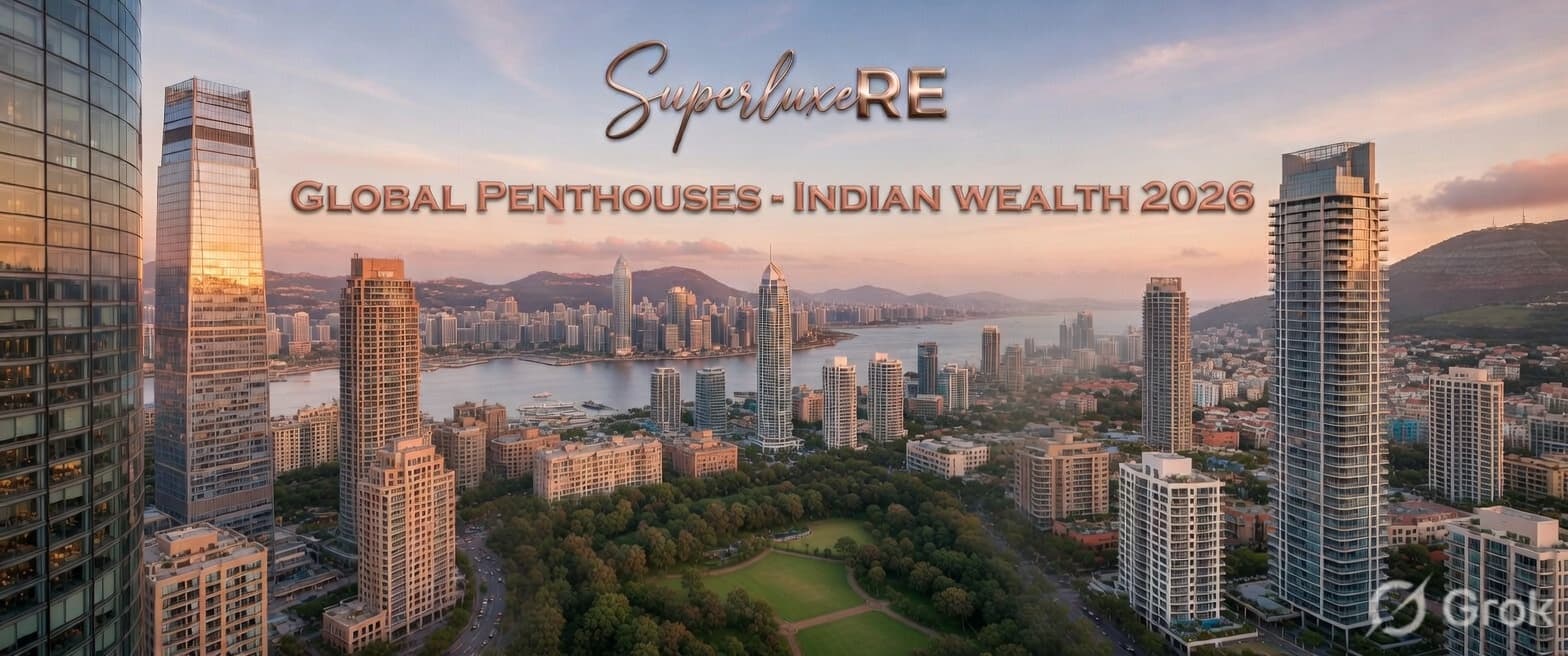
Decode the design DNA of the world's most expensive penthouses—from Central Park Tower to Cape Town—and what they reveal about India's emerging ultra-luxury market.

Written by
Himanshu Bamola
Founder & Principal Analyst, SuperLuxeRE · 16+ years in ultra-luxury real estate strategy
Himanshu advises HNIs, NRIs, and family offices on India's most complex luxury real estate decisions — from Golf Course Road to Worli. His market analysis is trusted by buyers across Singapore, Dubai, London, and the US.
In Succession, the Roy family's penthouse isn't just a residence—it's a power statement. The same goes for Jordan Belfort's sky-high lair in The Wolf of Wall Street. Popular culture has trained us to recognize one truth: penthouses are where winners live.
But what exactly makes a penthouse the ultimate real estate trophy? And more importantly for Indian investors eyeing the ₹50–150 crore segment: What can the world's most iconic penthouses teach us about design DNA, wealth psychology, and the future of ultra-luxury residential in Mumbai, Gurugram, and Bengaluru?
A new book, Penthouse by Peter Martin (published by Cultural Union), showcases eight of the world's most breathtaking sky-high residences. Each one offers lessons not just in design, but in how the ultra-wealthy signal status, seek privacy, and invest in aspirational real estate.
Let's decode what these global icons reveal—and how India's emerging penthouse market is racing to catch up.
The 8 Penthouses That Define Global Luxury (And What They Signal)
| Penthouse | City | Size | Key Design Signal | Wealth Message |
|---|---|---|---|---|
| 111 West 57th (Steinway Tower) | NYC | Duplex, 76th floor | Freestanding silver bathtub overlooking Central Park | "Decadence without vulgarity" |
| Residence 113, Central Park Tower | NYC | 7,074 sq ft, 5 BR | Dwarfed grand piano in sky-high living room | "Drama meets serenity" |
| One Hyde Park | London | 18,000 sq ft, 2 floors | Triple-aspect double-storey windows over Hyde Park | "London's dizzying property boom incarnate" |
| The Bryanston | London | 7,763 sq ft, 3 levels | Curved facade with 1960s sunset-yellow walls | "Everlasting sunsets" |
| K11 Artus | Hong Kong | 3,464 sq ft | Kitchen with wraparound harbour views | "Mundane tasks, extraordinary vantage" |
| 181 Fremont (Grande) | San Francisco | 4 BR, 700ft+ | TV embedded in walnut corner unit—views secondary | "Confidence to ignore the view" |
| Cape Town Penthouse | South Africa | 5,800 sq ft | Sunken seating, heroic lack of furniture | "Fearless use of stone, scale, space" |
| Showcase Residence | Hong Kong | — | Mid-century Brazilian furniture meets local greenery | "Mystery—secrets revealed slowly" |
The 5 Design Principles That Define World-Class Penthouses
1. The View Is the Star (But Restraint Is Key)
Notice how One Hyde Park keeps furniture subdued? The triple-aspect glass walls overlooking Hyde Park are the hero. The design rule: when nature or cityscape provides drama, interiors must practice restraint.
2. Zoning Without Walls: The Art of Open-Plan Luxury
Peter Martin notes that great penthouses use "ingenious zoning"—furniture, color, texture, screens—instead of walls. The Cape Town penthouse masters this with its sunken seating area and heroic lack of furniture.
Why it matters: Ultra-high-net-worth buyers want flexibility. Today's meditation zone becomes tomorrow's boardroom for family office meetings. Walls limit; zones adapt.
3. The "One Outrageous Element" Rule
Every iconic penthouse has one statement piece that borders on exhibitionism but stays tasteful:
- Steinway Tower: Silver bathtub overlooking Central Park
- Central Park Tower: Piano that looks dwarfed by ceiling height
- The Bryanston: Sunset-yellow curved walls
This is calculated audacity—a design move that says, "I can afford to be bold."
4. The "Ignore the View" Paradox
The 181 Fremont penthouse in San Francisco does something counterintuitive: it places a TV-embedded walnut unit as the bedroom's focal point, subtly downplaying the 700-foot-high bay views.
The signal? "I'm so wealthy, even million-dollar views are secondary to my comfort."
This is peak UHNW psychology—the confidence to treat extraordinary as ordinary.
5. Biophilic Integration: Nature Meets Altitude
The Showcase Residence in Hong Kong brings Brazilian mid-century furniture and local greenery indoors, creating what Martin calls "mystery"—a space that reveals itself slowly.
High-altitude living can feel sterile. The antidote? Vertical gardens, indoor trees, natural materials (stone, wood), and greenery-focused views.
What These Penthouses Reveal About Global Wealth Migration
Here's the deeper story these eight properties tell:
The Geography of Ultra-Wealth
| City | Penthouses Featured | Ultra-Wealth Signal |
|---|---|---|
| New York City | 2 (Steinway, Central Park Tower) | Finance & tech IPO liquidity; $100M+ penthouse market thriving |
| London | 2 (One Hyde Park, Bryanston) | Global wealth parking; £50–200M penthouses as "safe haven assets" |
| Hong Kong | 2 (K11 Artus, Showcase) | Asian wealth concentration; compact luxury (3,500 sq ft at $10–15M) |
| San Francisco | 1 (181 Fremont) | Tech founder exits; highest private home on US West Coast |
| Cape Town | 1 | Southern hemisphere luxury; lifestyle migration from Europe |
1. Strong rule of law & property rights
2. Gateway cities for international capital
3. Supply constraints (limited developable land) driving vertical luxury
India—especially Mumbai and Gurugram—is now checking all three boxes. That's why ₹100 Cr+ penthouses are no longer outliers but a growing segment.
India's Emerging Penthouse Market: Can We Compete Globally?
India's ultra-luxury residential market has exploded post-2020. Let's benchmark:
| City | Iconic Penthouse Project | Price Range | Size | Global Equivalent |
|---|---|---|---|---|
| Mumbai | Lodha Altamount, Oberoi Sky City | ₹100–150 Cr | 10,000–15,000 sq ft | London mid-tier |
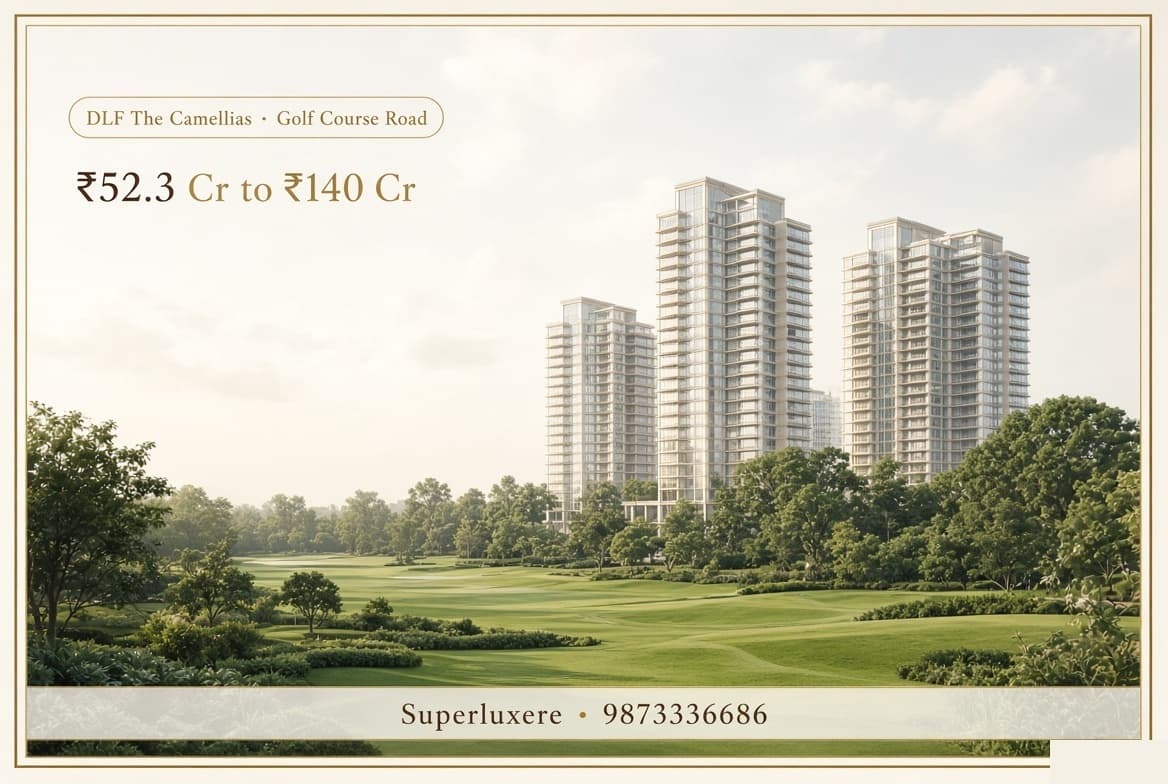
| Gurugram | DLF Camellias, Godrej Astra | ₹60–120 Cr | 12,000–18,000 sq ft | Hong Kong high-end |
| Bengaluru | Prestige Kingfisher Towers | ₹40–80 Cr | 8,000–12,000 sq ft | San Francisco emerging |
What's Missing in India's Penthouse Market?
- Vertical height: NYC's Central Park Tower is 1,550 ft; Mumbai's tallest residential (Lodha World One) is ~1,450 ft. We're close, but regulatory caps limit supertall development.
- Bespoke customization: Global penthouses offer blank-canvas interiors with ₹10–20 Cr customization budgets. India's developers still push "designer-curated" packages with limited flexibility.
- Service ecosystems: One Hyde Park offers 24/7 concierge, in-residence spa, private cinema. India's ultra-luxury projects are catching up (DLF Camellias has similar amenities), but execution lags.
- Resale liquidity: NYC/London penthouses trade 2–3× in a decade. India's ₹100 Cr+ segment has limited resale data (most are primary sales).
Buyer Psychology: Why Penthouses Command 40–60% Premiums
Here's what behavioral economics tells us about penthouse buyers:
1. Vertical Hierarchy = Social Hierarchy
Living higher = higher status. It's primal. Penthouse buyers aren't just buying space—they're buying literal elevation above peers.
2. Scarcity Premium
Most luxury towers have 1–4 penthouses vs. 50–100 apartments. Scarcity = pricing power. Mumbai's Lodha Altamount has only 2 penthouses per tower.
3. Privacy + Prestige
Penthouses offer private elevators, no upstairs neighbors, terrace access, helipads (in some global examples). This is "vertical gating"—exclusivity within exclusivity.
4. The "Wolf of Wall Street" Effect
Pop culture has codified penthouses as success symbols. For first-generation wealth creators (India's IPO founders, startup unicorn exits), buying a penthouse is a public declaration: "I've made it."
Ready to Explore India's ₹50–150 Cr Penthouse Market?
SuperLuxeRE specializes in ultra-luxury penthouse advisory—from off-market deals to bespoke customization negotiations.
Our White-Glove Service Includes:
- Access to unlisted penthouse inventory (Mumbai, Gurugram, Bengaluru)
- Developer track record audits & delivery assurance checks
- Interior designer matchmaking for ₹5–15 Cr customizations
- Vastu + architectural modification negotiation
- Tax structuring (LLP vs individual vs trust) for ₹100 Cr+ purchases
- Post-purchase concierge setup & property management
📞 +91-9873336686
FAQs: Everything You Need to Know About Penthouse Investing
In India: ₹100 Cr+ penthouses in Mumbai/Gurugram have shown 10–15% annual appreciation (2020–2025), driven by IPO wealth and supply scarcity. However, exit risk is real—the ₹100 Cr+ buyer pool in India is only 5,000–8,000 families.
Investment thesis: Buy if you plan a 7–10 year hold OR if you're buying for legacy/family office use. Avoid if you need liquidity within 3–5 years.
1. Private elevator: Essential. Shared elevators = not a true penthouse.
2. Terrace:floor ratio: Aim for 30–50% of indoor space. DLF Camellias offers 6,000–8,000 sq ft terraces on 18,000 sq ft units.
3. Structural modifications allowed? Can you knock down walls? Add a pool? Some projects restrict changes.
4. Helicity/Vastu: For Indian buyers, north/east-facing units command 10–15% premiums.
5. Sound insulation: At 200+ metres, wind noise is real. Check acoustic specs.
6. Service elevator: Separate access for staff/deliveries.
7. Fire safety: Helipads (rare in India), fire escapes, refuge areas.
8. Customization budget: Factor ₹5–15 Cr for interiors, ₹2–5 Cr for smart home/security.
• Pros: Established luxury market, sea views, better resale liquidity, global city brand.
• Cons: Stamp duty 6% (₹6 Cr on ₹100 Cr), limited new supply, older buildings.
• Best for: Legacy wealth, family offices, international buyers.
Gurugram:
• Pros: Larger unit sizes (15,000–18,000 sq ft vs Mumbai's 10,000–12,000), lower stamp duty 4.5%, newer construction (2023–2026 delivery), lower per-sq-ft cost (₹60–80k vs Mumbai's ₹80–120k).
• Cons: NCR infrastructure challenges, lower international brand equity, unproven resale market.
• Best for: First-gen wealth (IPO founders, startup exits), Delhi-based industrialists, larger families.
SuperLuxeRE take: Mumbai if you want prestige + liquidity. Gurugram if you want space + value.
Key rules:
• Payment via NRE/NRO accounts (no cash, no foreign cheques).
• TDS 20% on purchase (higher than resident 1%). Claim refund via ITR.
• Stamp duty same as residents (6% Mumbai, 4.5% Gurugram).
• Capital gains: LTCG 12.5% if held >2 years.
• Repatriation: Up to $1M/year sale proceeds can be repatriated after tax clearance.
Financing: Indian banks offer NRI home loans up to ₹5–10 Cr, but ₹100 Cr purchases typically need 70–90% down payment. Consider Singapore/Dubai-based wealth loans at 3–4% vs India's 8–9%.
Phase 1 – Discovery (Week 1–2): Understand your brief (location, size, Vastu, timeline), unlock off-market inventory, create shortlist of 3–5 penthouses.
Phase 2 – Private Viewings (Week 3–4): Arrange after-hours viewings (no public walk-throughs), facilitate architect/Vastu consultant meetings, benchmark pricing vs. comparable sales.
Phase 3 – Negotiation & Structuring (Week 5–8): Developer background checks (delivery track record, financial health), negotiate customization budgets, payment plans, club membership inclusions, legal due diligence (title, RERA, approvals), tax structuring (individual vs LLP vs HUF vs trust).
Phase 4 – Customization & Handover (Months 6–24): Interior designer selection (we work with Gauri Khan Designs, Sussanne Khan, Ashiesh Shah), construction monitoring, snagging audits, handover coordination, property management setup.
Fees: ₹5–10 lakh retainer + 1% success fee on transaction value (negotiable for ₹150 Cr+ deals).
Image Credit: BBC Culture / Various sources (Banda, Nicole Franzen, Evan Joseph, Sotheby's International Realty, Common Studio, Miminat Designs).
Disclaimer: This blog is for informational and educational purposes only. Real estate investments carry market, liquidity, and execution risks. Price projections are estimates based on historical data and may not materialize. SuperLuxeRE is a real estate advisory firm; we do not buy, sell, or hold client funds. Readers should conduct independent due diligence and consult legal, financial, and tax advisors before making investment decisions. All luxury property examples cited are for illustrative purposes and do not constitute endorsements or recommendations.